Declared Value or Third-Party Insurance: Which One Actually Covers Your Shipment?
August 21, 2026
U.S. Shipping Costs From 2026 Trade & Tariff Changes
September 10, 2026
Why Office Lab Equipment and Electronics Need Professional Protection
Office lab equipment and electronics need engineered, purpose-built protection because standard moving supplies are not designed to manage the shock, vibration, and pressure changes that occur during freight transit. A professional crating service evaluates each item’s weight, fragility, and internal components before building a solution around it, rather than forcing the equipment into generic packaging never meant for precision instruments. That evaluation step is what separates routine office movers from crating services built for sensitive assets.
The Transit Risks That Standard Moving Boxes Cannot Handle
Cardboard boxes and bubble-wrap bundles cannot control the forces that build up over hundreds of highway miles or multiple freight handoffs. Damage to electronics is often invisible from the outside; internal boards, drives, connectors, and mounted components can shift or fracture even when the housing looks untouched after delivery, as outlined in this overview of electronics shipping risks. Servers and lab analyzers are frequently heavier than their dimensions suggest, which means a box rated for general contents can buckle or tip under real load. Repeated handling between truck, dock, and warehouse multiplies the chances of an impact standard packaging was never built to absorb.
When Custom Crating Is Necessary Instead of Basic Packing
Custom crating becomes necessary once an item is large, heavy, high in value, or difficult to stabilize inside a standard container. Items commonly recommended for crating include fine art, sculptures, antique furniture, musical instruments, medical and laboratory equipment, servers, and anything irreplaceable or valued over $5,000, according to this guide to high-value crating criteria. Lab equipment used in genomic research and diagnostics falls squarely in this category, since a single analyzer or nanosystem device can represent a substantial capital investment that a facility cannot easily replace on short notice, as shown in this lab equipment crating case study. If a piece of equipment would be expensive or disruptive to repair, it belongs in a crate rather than a box.

What a Professional Crating Service Handles for You
A crating provider manages far more than building a wooden box around your equipment. Custom crating solutions typically include evaluating the item, selecting materials, engineering internal bracing, coordinating pickup and freight handoffs, and applying quality control checks before the shipment ever leaves the building. Providers experienced with IT and lab equipment routinely handle servers, workstations, commercial displays, networking hardware, and medical or diagnostic electronics under one coordinated plan, as described in this technology equipment shipping overview. For an office relocation, that means one accountable party managing safe transportation from the workstation to the new facility instead of multiple disconnected handoffs. If your relocation includes lab instruments specifically, it helps to work with a provider experienced in shipping lab equipment rather than a general movers who treats it like office furniture.
How Custom Crates Protect Sensitive Assets
Custom crates protect sensitive equipment by combining a rigid outer structure with internal materials engineered to stop movement, absorb shock, and control the environment around the item. A well-designed crate turns an exposed, vulnerable object into a stable, protected unit that can withstand multiple handling points between origin and destination, as explained in this freight crating guide. The materials and bracing method change depending on the item, but the underlying goal stays the same: nothing inside the crate should be able to shift.
Matching Crate Design to Weight, Dimensions, and Fragility
Crate engineering starts with the object, not a template. A true custom crate is built from the ground up around the product’s weight, shape, fragility, handling method, and shipping environment, rather than adapted from an off-the-shelf design, according to this explanation of engineered custom crate design. A 400-pound centrifuge and a 40-pound benchtop analyzer need entirely different internal supports, wall thicknesses, and base structures even if both are heading to the same new office. Getting this stage wrong is the most common reason crated freight still arrives damaged.
Internal Bracing, Shock Control, and Protective Layers
Internal bracing keeps an item from shifting even if the crate tilts or takes a jolt during transit. Custom-built braces hold the item in a fixed position, while sensitive equipment is often lined with specialized foam or “floated” on shock-absorbing skids to neutralize vibration from road or sea transport, as detailed in this guide to crate bracing and shock absorption. A typical crate build layers several forms of protection together: bubble wrap and shrink wrap around individual components, foam inserts or custom foam inserts cut to the exact profile of the equipment, and blocking and bracing that ties the item to the crate’s frame. Anti-static materials get added for circuit boards and sensitive electronic assemblies, and moisture barriers come into play for longer transits or humid climates.
Choosing Wooden Crates, Reusable Crates, or Metal-Supported Designs
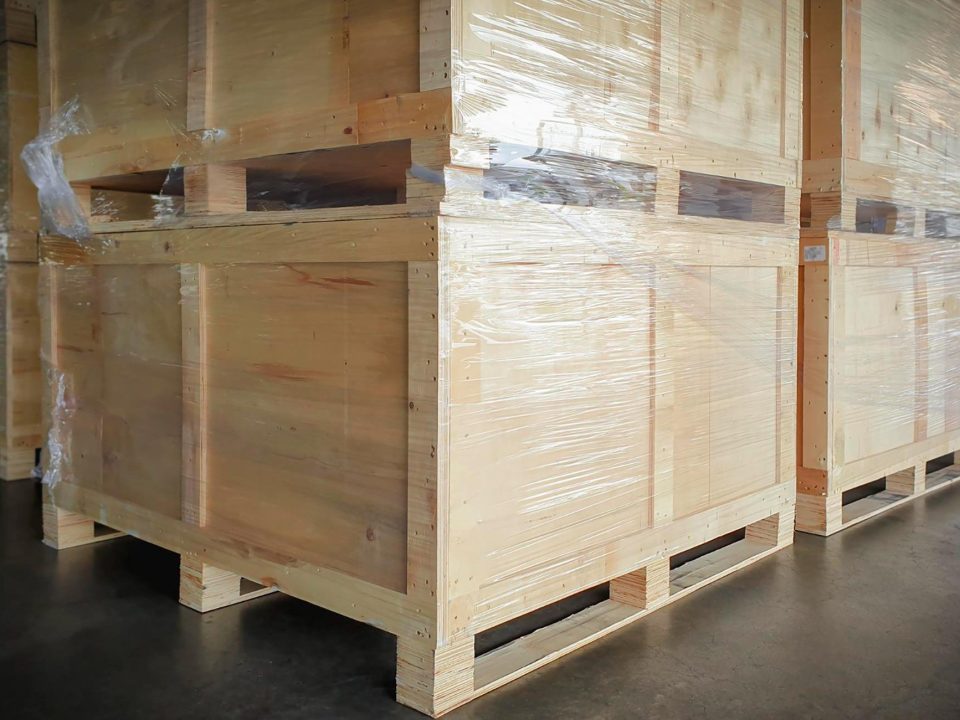
Wooden crates remain the standard for freight because they offer a rigid, load-bearing structure that cardboard cannot match, particularly for LTL freight where cargo is handled multiple times between pickup and delivery, as noted in this comparison of crating and packaging methods. Reusable crates make sense for equipment that moves between facilities on a recurring basis, such as test instruments cycled through service centers, since the crate can be reopened and reshipped without rebuilding. Metal-supported designs get reserved for extremely heavy machinery or repeated industrial handling where wood alone would flex under the load. If you’re weighing whether crating makes sense for an upcoming move at all, this breakdown of why custom crating matters for a move walks through the decision points in more detail.
Crating Lab Equipment, Servers, and High-Value Office Assets
Different categories of office and lab assets need different crating approaches, since a CNC machine’s weight and rigging needs bear little resemblance to a server’s sensitivity to static or a sculpture’s need for surface protection. Matching the crate design to the asset type is what keeps heavy industrial gear, precision electronics, and irreplaceable art from being treated with the same generic solution.
CNC Machines and Industrial Equipment
CNC machines and other industrial equipment demand crates engineered for extreme weight loads, forklift access, and rigging safety. These builds prioritize a reinforced base and secure tie-down points over cushioning, since the primary risk is structural shifting or tipping rather than surface damage. Custom industrial crating solutions typically start with the item’s specifications and select materials that balance protection, cost, and shipping requirements for both lightweight sensitive assets and heavy-duty industrial designs, according to this overview of industrial crating design. Rigging knowledge matters here as much as the crate itself, since improperly secured heavy equipment can shift the entire pallet during transport.
Electronics, Servers, and Precision Instruments
Servers, server racks, and precision lab instruments need protection focused on internal component stability rather than raw load-bearing strength. These assets are dense, often heavier than expected, and house fragile internal parts, which means crates built for them emphasize foam cushioning, blocking and bracing, and anti-static materials over bulk reinforcement, as described in this breakdown of electronics packing methods. ESD-safe (electrostatic discharge-safe) packaging is not optional for circuit boards, medical device electronics, or semiconductor components, since a static discharge during handling can silently damage components without any visible sign, according to this explanation of ESD-safe crating. If your relocation includes IT infrastructure, it’s worth confirming your provider’s custom crating services specifically address static-sensitive equipment before the move date.
Fine Art, Paintings, Sculptures, and Heirlooms in Corporate Spaces
Fine art, paintings, sculptures, and corporate heirlooms show up more often in office relocations than facilities managers expect, particularly in executive suites, lobbies, and boardrooms. These pieces need crates built around surface protection and controlled internal movement rather than load capacity, since scratches, pressure marks, and frame damage are the primary risks rather than structural failure. A crate for a sculpture or painting typically uses soft internal padding, corner protection, and a snug fit that prevents any sliding, a different priority set than the bracing used for a heavy CNC machine. If your relocation involves valuable art pieces, this guide on moving antiques and artwork using custom crates covers the specific handling considerations involved.

Onsite Crating vs. Warehouse Crating for an Office Move
Onsite crating and warehouse-based crating both protect equipment effectively, but the right choice depends on how much handling risk you can remove by building the crate where the equipment already sits. Onsite crating eliminates a transport leg entirely, while warehouse crating gives access to fuller shop equipment and climate-controlled warehousing for phased projects.
When Onsite Crating Reduces Handling Risk
Building the crate at your facility removes the need to load unprotected equipment onto a truck and haul it to a separate packaging shop first. On-site crating is particularly useful for manufacturing, export, and logistics operations handling large or sensitive equipment, since it avoids the extra handling cycle that pre-built or off-site crating requires, according to this comparison of on-site and off-site crating. For a lab move, this means the analyzer or server rack gets crated at the bench or rack location and never travels unprotected, even for the short trip to a loading dock.
When a Crating Facility Is the Better Choice
A dedicated crating facility makes sense when equipment needs specialized tools, climate-controlled storage between crating and shipping, or when a project involves consolidating many items from multiple locations. Facilities equipped for domestic shipping and efficient transport can also stage freight for optimal loading, reducing the number of touches an item experiences before final delivery. Comparing on-site versus off-site crating options against your specific equipment list and timeline, as outlined in this guide to crating service options, helps determine which model fits a given relocation better than defaulting to one approach for every project.
| Factor | Onsite Crating | Warehouse Crating |
|---|---|---|
| Extra handling before crate build | None | One transport leg |
| Access to specialized tools | Limited | Full shop access |
| Climate-controlled staging | Not typically available | Available |
| Best fit | Single-location moves, sensitive lab gear | Multi-location consolidation, phased projects |

Coordinating Pickup, Loading, and Delivery Windows
Scheduling is where office relocations most often go wrong, particularly when IT downtime windows or lab shutdown periods are tightly defined. A crating partner needs to confirm pickup timing, loading sequence, and delivery windows well before moving day, since a missed dock appointment or an unavailable freight lift can delay an entire relocation by days. Coordinating this timeline through one provider, rather than juggling separate packing and freight companies, keeps the handoffs between packing, loading, and transport under a single point of accountability.
Preparing Crated Freight for Domestic and International Transit
Crated freight needs a forklift-ready base, complete documentation, and compliant wood packaging before it can move through a domestic or international carrier network. Getting these details right at the outset prevents delays at the dock and, for international shipments, at customs inspection.
Pallets, Skids, and Forklift-Ready Bases
Every crate destined for freight transport needs a base built for mechanical handling. Pallets and skids give forklift operators and dock workers a standardized way to move the crate without applying direct force to its walls or contents. Preparing shipping pallets correctly, including weight distribution and secure attachment to the crate above them, is a step worth reviewing in detail through this guide on how to prepare shipping pallets for freight, particularly for facilities managers coordinating their first crated office move.
BOL Details and Carrier Handoffs
The BOL (bill of lading) is the legal document that travels with the freight and records what’s being shipped, its weight, its origin and destination, and the terms of carriage. Errors on a BOL, such as an inaccurate weight or missing item description, can delay a carrier handoff or complicate a damage claim later. Confirming BOL details before pickup, alongside a clear handoff plan between the crating team and the carrier, keeps freight shipping on schedule and creates a paper trail if anything needs to be disputed after delivery.
Meeting International Shipping Regulations for Wood Packaging
International shipping of wood-crated equipment requires compliance with shipping regulations covering the wood packaging material itself, not just the contents. Export shipments need heat-treated wood that meets applicable ISPM 15 requirements, an international standard that prevents the spread of pests through wood packaging material, according to this explanation of export crating requirements. Crates that arrive without proper ISPM 15 stamping can be held, fumigated, or rejected at the border, which turns a routine shipment into a costly delay. Reviewing international shipping regulations for your destination country before crate construction begins, rather than after the crate is built, avoids rework and missed delivery windows; this guide on key considerations for international freight forwarding covers the documentation side of that process.
How to Choose a Crating Partner for an Office Relocation
Choosing a crating partner comes down to verifying engineering capability, checking documentation and coverage practices, and confirming how they handle storage and returns after delivery. Providers such as Craters & Freighters have built decades of experience specifically around technology and laboratory equipment, which is a useful benchmark when evaluating any provider’s stated expertise against your equipment list, as shown in this overview of technology equipment shipping services.
Questions to Ask About Engineering, Materials, and Handling
Ask to see examples of wood packaging and custom crating the company has built for moves similar to yours, since manufacturing capability varies significantly between providers, according to this guide to evaluating crating partners for facility moves. Ask specifically how the crate will be engineered for your item’s weight and fragility, what internal bracing and cushioning materials they use, and whether their team handles rigging for heavy equipment onsite. A provider unable to answer these questions with specifics, rather than general reassurances, is a signal to keep evaluating other options.
Verifying Coverage, Documentation, and Quality Controls
Confirm what documentation the provider issues at each stage, including the BOL, packing lists, and any quality control checklist completed before the crate is sealed. Ask directly about their compliance record with regulations like ISPM 15 for international shipments, and how they document that compliance for customs purposes, as recommended in this guide to choosing a custom crating company. A provider with clear quality control steps, documented before pickup rather than assumed, gives you a paper trail if a damage claim ever needs to be filed.
Planning Storage, Returns, and Reverse Logistics
Office relocations rarely move in one clean step, and equipment sometimes needs to sit in climate-controlled warehousing between the old and new space or return to a vendor for service. Ask your crating partner how they handle reverse logistics, meaning the process of returning equipment, packaging materials, or reusable crates back through the supply chain after initial delivery. A provider offering custom crating solutions alongside storage and return capability under one contract simplifies a relocation timeline that would otherwise require coordinating separate vendors for each phase; reviewing domestic shipping services options ahead of time helps confirm a provider can support the full lifecycle of your move.