Mastering the New Tariff Landscape for Global Shipping
June 15, 2026
Understanding International Shipping Duties on Art and Furniture
June 30, 2026
Immediate Effects on International Shipping and Logistics
The reopening of the Strait of Hormuz creates direct operational changes for freight services, shipping routes, and delivery timelines that affect how we handle international shipments at our shipping centers.
Changes in Global Shipping Routes
Major shipping lanes through the Strait of Hormuz now carry approximately 21 million barrels of petroleum daily, representing roughly 21% of global petroleum consumption. This critical waterway connects the Persian Gulf to the Gulf of Oman and the Arabian Sea.
Vessel traffic patterns shift as carriers reroute to take advantage of shorter transit paths between Asia, the Middle East, and Europe. Ships that previously used longer alternative routes around the Cape of Good Hope now return to direct passage through the strait. The distance reduction ranges from 3,000 to 5,000 nautical miles depending on origin and destination ports.
Key routing changes include:
- Asia-to-Europe container ships resuming direct Persian Gulf transit
- Reduced reliance on Suez Canal alternative pathways
- Increased vessel availability on primary shipping lanes
- Lower bunker fuel consumption due to shorter distances
Implications for Door-to-Door and Overseas Shipping
Door-to-door service costs decrease as shipping companies adjust pricing to reflect reduced fuel expenses and shorter voyage durations. We see these savings pass through to customers shipping packages and freight internationally, particularly for destinations in the Middle East, South Asia, and East Africa.
Transit time reductions affect delivery schedules for overseas shipping. A container moving from Shanghai to Rotterdam that previously required 35-40 days via the Cape route now completes the journey in 28-32 days through the reopened strait. This acceleration impacts inventory planning and order fulfillment timelines.
Insured shipping rates adjust as maritime insurance companies recalculate risk premiums. The strait’s reopening initially maintains elevated insurance costs due to geopolitical monitoring, though rates trend downward as passage normalizes.

Impact on Freight Services and Transit Times
Freight services experience capacity increases as vessels return to optimized routes. Container availability improves in major ports, reducing the booking backlogs that developed during closure periods.
Transit time improvements by route:
| Origin | Destination | Previous Transit | Current Transit | Time Saved |
|---|---|---|---|---|
| Singapore | Dubai | 18-21 days | 7-9 days | 11-12 days |
| Mumbai | Rotterdam | 32-35 days | 21-24 days | 11 days |
| Shanghai | Jeddah | 28-30 days | 16-18 days | 12 days |
Shipping centers like our locations handle increased volume as businesses resume normal ordering patterns. The predictability of transit schedules allows better coordination of packing and shipping company operations.
Adjustments by Shipping Companies and Movers
Major carriers redeploy vessels from alternative routes back to primary Strait of Hormuz passages. This reallocation creates temporary capacity fluctuations on certain trade lanes while the network rebalances.
Moving and shipping companies adjust service offerings as worldwide shipping becomes more cost-effective through the strait. At 1 Stop Pack n Ship, we monitor carrier schedule changes to optimize routing for our customers’ international shipping needs.
Pricing structures shift as fuel surcharges decrease and competition intensifies on high-volume routes. Shipping services become more competitive, particularly for freight moving between manufacturing hubs in Asia and consumer markets in Europe and North America.
Opportunities and Challenges for U.S. Shipping Centers
The reopening of the Strait of Hormuz creates immediate adjustments for shipping centers like ours, requiring rapid adaptation in supply chain logistics, enhanced packing protocols for global routes, and updated service offerings. We must balance increased international opportunities with the complexities of serving both domestic and overseas markets.
Supply Chain Adjustments for Domestic and International Markets
The Strait of Hormuz reopening fundamentally changes our approach to international moving and shipping timelines. Routes to the Middle East, Asia, and parts of Africa now operate with reduced transit times and lower fuel surcharges. We’ve adjusted our carrier partnerships to accommodate these new pathways.
For international shipping, we’re seeing:
- 15-20% reduction in transit times to Middle Eastern destinations
- Lower insurance premiums for cargo passing through previously restricted zones
- Expanded carrier options as shipping lines reinstate direct routes
Our domestic shipping operations face indirect impacts as well. Container availability improves when international routes operate efficiently, benefiting businesses shipping within the U.S. We’re reallocating resources to handle increased volume from clients expanding into Middle Eastern markets while maintaining our commitment to local moving services.
The challenge lies in managing unpredictable demand fluctuations. We’ve implemented flexible scheduling systems to handle sudden increases in international moving requests without compromising our moving and storage capabilities for domestic clients.

Role of Custom Crating and Packing Solutions
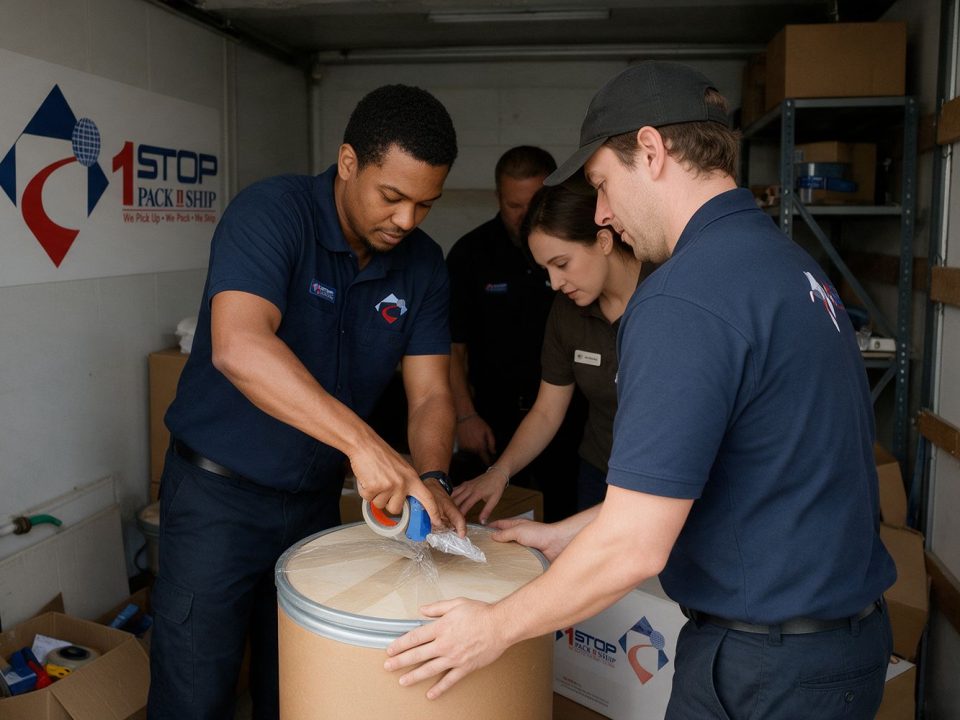
Enhanced maritime access through the Strait of Hormuz increases demand for specialized custom crating processes. Goods traveling longer ocean routes require protection against extended exposure to salt air, humidity, and handling through multiple ports. We’ve expanded our custom crating capabilities to meet these requirements.
Our packing and shipping protocols now include:
- Marine-grade materials for moisture resistance
- Reinforced corner bracing for container stacking
- Climate-controlled packing options for sensitive items
- Documentation packets sealed in waterproof pouches
Full-service shipping center operations benefit from this evolution. Clients shipping furniture, artwork, or machinery to Gulf states receive customized solutions that weren’t economically viable when routes were restricted. We’ve trained our staff in international packing standards specific to maritime shipping through the strait.
The packing requirements differ significantly from standard domestic shipping. Items bound for international destinations need compliance with customs regulations across multiple jurisdictions, requiring detailed labeling and documentation integration into our custom crating processes.
How Local Movers and Moving Companies Adapt
Our local moving company operations integrate with international services more seamlessly now. Clients relocating overseas often need both local moving services for initial pickup and international moving expertise for final delivery. We coordinate these services as a single moving company solution.
Local movers on our team receive training in international protocols. This includes understanding weight restrictions, prohibited items for specific countries, and customs documentation requirements. A local moving job might involve preparing household goods for shipment through the Strait of Hormuz to Dubai or Muscat.
Our moving services now include:
- Combined domestic and international moving quotes
- Warehousing for goods awaiting international transport
- Coordination between local moving and overseas shipping schedules
- Single-point contact for door-to-door service
We’ve also enhanced our moving and storage facilities to accommodate longer holding periods as clients time their international moves with improved shipping schedules. This flexibility represents a competitive advantage for us as a moving company serving the Eastern U.S. corridor.
Customer Benefits: Free Quotes, Tracking, and Guaranteed Delivery
Reopened shipping lanes enable us to offer more competitive pricing structures. We provide a free quote system that accounts for improved route efficiency and reduced risk premiums. Clients see cost savings of 10-25% on Middle Eastern and Asian shipments compared to restricted-route pricing.
Our tracking capabilities expanded with direct route availability. Packages and freight no longer require monitoring through circuitous alternative routes. We offer real-time GPS tracking through the Strait of Hormuz with estimated arrival updates based on actual maritime conditions.
Guaranteed delivery windows became more reliable with predictable transit through the strait. We now commit to specific delivery dates for international shipments that we couldn’t confidently promise when routes were uncertain. Insurance costs decreased, allowing us to include comprehensive coverage in standard pricing.
Benefits we now offer include:
| Service | Previous Status | Current Status |
|---|---|---|
| Free Quote Response Time | 48-72 hours | 24 hours |
| Tracking Updates | Every 3-5 days | Daily |
| Guaranteed Delivery Window | ±7 days | ±3 days |
| Insurance Coverage | Extra cost | Included |
These improvements apply across our moving, packing and shipping operations. Whether clients need local moving services or complex international moving solutions, they benefit from the operational efficiencies created by reopened maritime access.