Where Can I Ship Art in Arlington?
April 16, 2025
How to Save Money on Shipping Costs
April 30, 2025
Shipping across borders sounds simple—box, label, send. But anyone who’s done it knows it involves far more. International shipping comes with a mix of paperwork, logistics, and responsibility that can catch even seasoned business owners off guard. It’s not just about getting a product from A to B—it’s about doing it legally, efficiently, and safely.
Essential Documentation for Seamless Customs Clearance
Customs can hold up your shipment if you’re missing just one document. Every international package needs a commercial invoice, packing list, and sometimes a certificate of origin. These aren’t just for the sake of paperwork—they explain to customs officers what’s inside, where it’s from, and what it’s worth. Missing or incorrect documents could mean delays, fees, or even confiscation.
A lot of shippers don’t realize that customs requirements vary by country. That’s why it’s smart to double-check destination-specific rules before sending out goods. If your documents don’t match what’s inside, customs agents could red-flag your package, leading to delays that ripple through your supply chain. Correct documentation keeps your shipment moving and your business on schedule.

#image_title
Harmonized Tariff Codes—The Key to Accurate Duties
Every product shipped internationally needs a harmonized tariff code, or HS code. This code tells customs what your item is so they can calculate the correct import duty. One wrong digit can mean overpaying or underpaying taxes, and both cause problems. Overpayment eats into your profit. Underpayment leads to penalties or returned shipments.
The HS code system is global, but classifications can get specific. A leather shoe has a different code than a canvas sneaker, even though they seem similar. It’s not just about the item—it’s about the material, use, and even the country of manufacture. Getting it right saves money and keeps things moving without added scrutiny.
Incoterms That Define Shipping Responsibilities Clearly
Incoterms might sound like legal jargon, but they’re actually clear rules that explain who’s responsible for what during shipping. These terms, like FOB or DDP, define who pays for shipping, who handles insurance, and who owns the goods at each point. They prevent misunderstandings between buyers and sellers across countries.
Without Incoterms, things can get messy fast. For example, if a shipment is damaged during transit, who covers the loss? If the buyer thought the seller was responsible, and the seller assumed otherwise, disputes follow. Picking the right Incoterm up front sets expectations and avoids confusion once goods are en route.
Freight Forwarders’ Role in Risk Mitigation and Efficiency
Freight forwarders act as middlemen, but they’re far from unnecessary. We manage the details of moving goods between countries—from booking cargo space to dealing with customs brokers. Using one can simplify international shipping dramatically, especially when handling bulk orders or multi-country routes.
More importantly, freight forwarders reduce your exposure to risk. We know how to avoid common mistakes that delay shipments, and we have established relationships with customs officials. That means smoother transitions, fewer surprises, and a lot less time spent chasing updates or correcting errors.
Understanding Dimensional Weight in Global Freight Pricing
Dimensional weight pricing can throw off cost estimates if you’re not paying attention. Carriers use the space a package takes up—not just its weight—to determine cost. A large but light box might cost more to ship than a small but heavy one. That’s because space on a plane or truck is just as valuable as weight capacity.
If you’re shipping internationally, using the wrong-sized packaging can cost you. Freight companies charge based on whichever is higher—actual weight or dimensional weight. Optimizing your box sizes and packing materials can lower costs. It’s not about squeezing things in—it’s about using space wisely to keep shipping fees in check.
Cargo Insurance Essentials for International Shipments
Regular shipping doesn’t always include full coverage. Cargo insurance protects your goods while they’re in transit, especially across oceans or borders. Lost or damaged packages are more common than most assume, and without coverage, you’re on the hook for the full loss. Insurance gives you peace of mind and protects your bottom line.
Not all cargo insurance policies are created equal. Some only cover specific events like theft or storm damage. Others cover broader situations like handling mishaps or customs seizures. Make sure the policy matches your risk exposure, especially if your goods are fragile, high-value, or temperature-sensitive.
Navigating Port Congestion and Transit Delays Effectively
Ports are busier than ever, and congestion is a real issue. Ships can get stuck waiting for unloading space, causing days—or even weeks—of delay. That affects everything from inventory to customer satisfaction. Planning around potential bottlenecks is key, especially during peak shipping seasons.
One way to deal with congestion is by choosing alternative ports or shipping routes. Freight forwarders often know which ports are experiencing slowdowns and can reroute cargo accordingly. Clear communication with clients and contingency plans make these delays manageable rather than chaotic.
Ensuring Compliance with International Packaging Standards
Packaging standards vary depending on what and where you’re shipping. Some countries have strict rules for materials used—like restrictions on certain plastics or wood. Using non-compliant packaging can lead to rejected shipments or fines. Knowing the destination’s regulations prevents wasted time and money.
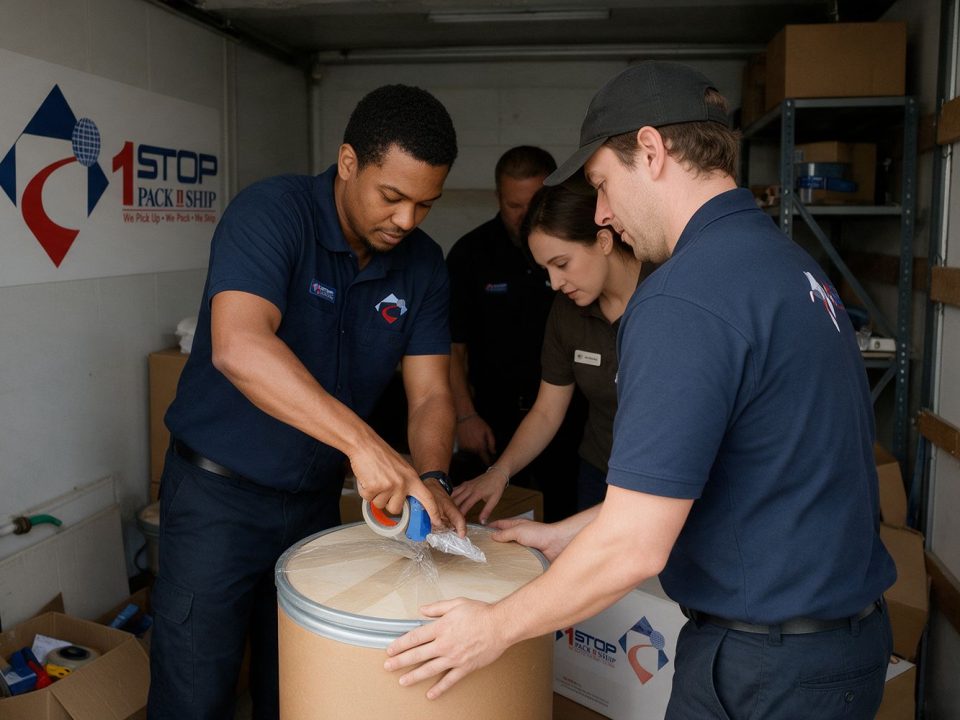
Beyond rules, good packaging protects your product. International shipments go through multiple handoffs—warehouse, ship, customs, local delivery—and each one is a chance for damage. Using the right boxes, sealing materials, and internal padding can make the difference between a safe delivery and a costly return.
Trust the Experts at 1 Stop Moving Pack n’ Ship for Seamless International Shipping—We Handle the Details So You Can Focus on Growth
International shipping doesn’t have to be a guessing game. With the right partner by your side, it becomes a strategic part of your business—one that opens up markets and builds trust with customers worldwide. At 1 Stop Moving Pack n’ Ship, our team handles every part of the process, from the correct documentation to packaging standards, so your shipment avoids hiccups along the way.
Whether you’re sending one crate or a full container, 1 Stop Moving Pack n’ Ship brings experience, accuracy, and dedication to every shipment. We’ll walk you through customs paperwork, get the right HS codes in place, and even help you pick the best Incoterms to protect your bottom line. Looking for help with international shipping? Contact us today and ship smarter with a team that handles the hard parts for you.