How the Straight of Hormuz Opening Impacts Global Shipping
June 21, 2026
Understanding Incoterms® 2020 and Their Impact on Shipping Liability
July 10, 2026
Key Factors Affecting Duties on Art and Furniture
Whether you end up paying import duties on art or furniture really comes down to how customs authorities decide to classify your shipment, where it’s coming from, and how you declare its value—sometimes it feels like a bit of a moving target, honestly. The line between what counts as a personal versus commercial import, plus any trade agreements that might be in play, and the method they use to figure out customs value—all of that directly affects what you’ll owe (or hopefully not owe) in duties.
Commercial Versus Personal Imports
Customs folks don’t treat commercial imports the same as personal shipments when it comes to calculating duties or sorting out what paperwork you need, and if you’re bringing in art or furniture as a business—like for resale, an exhibition with plans to sell, or just to pad your inventory—you’ll definitely get more scrutiny and probably higher duty rates than if you’re just hauling in a single piece for yourself. Commercial imports mean you’re in for formal customs declarations, commercial invoices, and sometimes extra documents to prove authenticity or provenance, while personal imports that fall under certain value thresholds might qualify for simpler clearance or even lower duty rates, depending on where you’re shipping to. The transaction value—basically what you actually paid—is the main number customs uses for calculating duties on commercial imports, and they’ll want to see your purchase invoice, payment records, and any commissions or broker fees that should be included in the customs value. If it’s a personal import, sometimes they’ll go by fair market value instead of the price you paid, especially if it’s a gift or you don’t have a straightforward purchase receipt (which, let’s face it, happens more often than we’d like).
The country of origin is another big deal because it determines which duty rate applies, and while original artworks usually get a 0% duty rate under Chapter 97 of the Harmonized System (HS) no matter where they’re from, furniture and decorative stuff can get hit with duties up to around 6% depending on where they were made. Trade agreements can really save your bacon here—countries like the U.S., the EU, and a bunch of others have deals that lower or even erase duties on goods from partner countries, but you’ll need a certificate of origin or something similar to actually claim those perks. There are always curveballs, too: Abu Dhabi rolled out a duty waiver program in February 2026 for certain categories, and the EU tightened up import rules in June 2025 with new licensing requirements for cultural goods. These regional changes mean the same piece of art could get totally different duty treatment depending on where it’s headed and whether you’ve got the paperwork lined up at the right time.
The declared value you put on your customs forms has to reflect what you really paid or what the item’s actually worth—don’t be tempted to fudge it, because undervaluing is illegal and can get your shipment seized, plus penalties and even criminal charges (not worth it). Customs has access to auction records, gallery price lists, and all sorts of valuation databases, so they can check if your declared amounts look fishy. For art, your customs value has to include the price you paid, insurance, freight, and any commissions to brokers or agents—if you bought something at auction, don’t forget to add the buyer’s premium and shipping charges to the hammer price for the duty calculation. Import taxes like VAT are a whole separate headache from customs duties and usually apply to the total customs value; in the EU, import VAT rates range from 5% to 25%, and since they scrapped the €150 threshold, every imported good gets hit with VAT from the first euro. Spain’s 21% VAT on art has even sparked dealer protests in early 2026, which just goes to show how these taxes can sometimes be a bigger burden than the duties themselves.
Customs Clearance Process for International Shipments
Getting art and furniture across borders is never as simple as just packing up and shipping out—it’s all about the details of customs clearance, and whether your shipment breezes through or gets stuck (with extra costs and headaches) usually comes down to paperwork, valuation, and whether you’ve got a customs broker who knows the ropes with U.S. Customs and Border Protection.
Essential Documentation Requirements
You’ll need a handful of core documents to start customs clearance for your art or furniture. The commercial invoice is the backbone here—it needs to spell out item descriptions, values, seller and buyer info, and the terms of sale; for art, don’t skimp on details like artist name, medium, dimensions, creation date, and provenance if you’ve got it. The packing list goes hand-in-hand with the invoice, listing out contents, weights, sizes, and how everything’s packed—if it’s furniture, mention what it’s made of; if it’s art, say how it’s framed and protected. Your customs declaration will need a bill of lading for ocean shipments or an airway bill for air freight (these are your proof of shipment and title docs), and for U.S. imports, you’ll also have to file an Importer Security Filing (ISF) at least 24 hours before the vessel loads, which means providing ten specific data points like seller info, manufacturer details, and harmonized tariff codes. Depending on what’s in your shipment, you might need import permits too—furniture made with endangered species needs CITES permits, and for significant artworks, export docs or cultural heritage certificates from the origin country prove you’re shipping legally.
Customs Valuation Methods
When it comes to figuring out duty amounts, customs relies on your declared value using specific valuation methods, and the main one is transaction value—what you actually paid (or will pay) for the goods, with some extras thrown in. For art and antiques over 100 years old, you can actually get duty-free entry under HTS code 9706.00.00, but you’ll need documentation to prove the age; contemporary art usually gets hit with duty rates between 0% and 6.5%, depending on the medium and materials. Your customs value needs to include costs like freight to the U.S. port, insurance, and packing before arrival, but you can leave out international shipping insurance if it’s listed separately. For furniture, CBP will take a hard look if your declared value seems suspiciously low compared to similar items, and that could mean an inspection. If you’ve got high-value art, appraisals from qualified experts really help back up your customs declaration, and it’s smart to hang onto purchase receipts, gallery invoices, and auction records just in case. CBP can always challenge your declared values and use comparable sales data or deductive methods if they suspect something’s off.
Role of Customs Brokers and Authorities
Customs brokers are basically your go-to people for navigating customs—they’re licensed pros who handle your paperwork, figure out tariff classifications, calculate what you owe, and deal with customs authorities, which is especially handy for complicated art shipments with multiple pieces or weird materials. U.S. Customs and Border Protection is the main authority checking your shipments—they’ll review your docs, figure out duties, and decide if a physical inspection’s needed. Plus, they enforce rules for over 40 federal agencies, including stuff like cultural property and endangered species regulations that can be a real minefield for art and antique furniture. Even if you use a customs broker, you’re still the importer of record and ultimately responsible for making sure everything’s above board—keep your records for five years and be honest on your declarations. A lot of art logistics companies team up with customs brokers who specialize in fragile, high-value shipments, so you get proper clearance without risking your insurance or security along the way.
Harmonized Tariff Classification and HTS Codes
Every single item you bring into the U.S. needs a 10-digit HTS code—it’s not optional—and that code decides your duty rates and what regulations you’re up against. Amazingly, misclassification is behind 42% of customs penalties, so nailing the right tariff classification is a must for art and furniture imports.
HTS Code Assignment for Art and Furniture
The Harmonized Tariff Schedule breaks down art and furniture into categories based on what it’s made of, how it’s used, and sometimes even its value. Original paintings are usually under HTS code 9701, sculptures and statuary get 9703, and furniture is all about materials—wood furniture typically starts with 9403.60, metal with 9403.20. Limited-edition prints are a bit of a gray area; if they’re original works in editions of 200 or less, they might get 9702 (duty-free), but mass-produced prints usually fall under chapter 49 as printed matter, which means different duties. Antiques over 100 years old go under chapter 97, but you’ve got to show proof of age and authenticity to customs. Mixed-media pieces are tricky—the main component that gives the piece its “character” is what determines the classification, which can be a judgment call.
Common Misclassification Risks
People misclassify art as furniture (or vice versa) all the time, which leads to wrong duty calculations and sometimes fines. For example, a decorative wall sculpture counts as art under chapter 97, but a carved wooden panel meant as furniture needs to go under chapter 94. Getting the material right is crucial, too—calling a resin sculpture “stone” or saying a veneer piece is “solid wood” can change both the code and the tariff rate. You really need to be specific about materials on your commercial invoice. There’s also the handmade vs. mass-produced question—original art gets better treatment than commercial reproductions, and customs might ask for artist statements, certificates of authenticity, or production records to check your classification.
Tariff Rates and Duty Exemptions
Original paintings and drawings come into the U.S. duty-free under HTS code 9701.10.00, and the same goes for original sculptures and statuary—these exemptions apply no matter how valuable the artwork is or where it’s from. Furniture, on the other hand, gets a range of tariffs—usually from 0% up to 8%, depending on what it’s made of and how it’s built. Wooden dining chairs might have a different rate than upholstered sofas or metal office desks. Duty Exemptions to Consider:
- De minimis shipments under $800 (duty-free for most items)
- Antiques over 100 years old (duty-free under chapter 97)
- Items eligible for trade agreement benefits (USMCA, etc.)
- Temporary imports for exhibition or demonstration
If you’re importing furniture from a country with a trade agreement, you could see reduced or even zero duties, but you have to file the right paperwork at entry to actually get the benefit.
Calculating Taxes, Fees, and VAT/GST
Import taxes really stack up—there’s the base customs duty, but then you’ve got VAT or GST on top, which is calculated on your art and furniture value plus any duties already charged, and to top it off, customs processing fees add their own fixed costs no matter what your shipment is worth. It adds up fast, and honestly, it’s easy to underestimate just how much the final bill will be.
VAT and GST Implications by Country
So, VAT is something you’ll run into in all the European Union countries, the UK, and honestly, a surprising number of other places too—usually running anywhere from 15% up to 27%. It’s calculated on the total customs value of your item, plus shipping costs, insurance, and any duties you’ve already shelled out. Let’s say you’re importing a painting to Germany, valued at $5,000, and you’ve got $500 in duties; with Germany’s 19% VAT, you’re paying VAT on $5,500, which tacks on another $1,045. GST works in a pretty similar way in countries like Australia (10%), Canada (5% federal, but then there are those provincial add-ons), and New Zealand (15%). Canada’s got its own twist with HST in some provinces, so the combined rate can hit 15%. These taxes pile on top of the duty-paid value, so the costs really start to snowball if you’re not careful. Most places will let you off the hook for shipments under a certain threshold—usually between $20 and $200 USD—but let’s be real: if you’re shipping art or furniture worth anything, you’ll probably blow right past those de minimis values.
Merchandise Processing Fee and Harbor Maintenance Fees
In the U.S., you can’t avoid the Merchandise Processing Fee (MPF), which is 0.3464% of the value of your shipment, but there’s a floor of $27.75 and a ceiling of $538.40 per entry. This applies to formal entries, and if you’re shipping art or furniture worth more than $2,500, you’re stuck with it. Then there’s the Harbor Maintenance Fee (HMF), which is 0.125% of the cargo value for anything coming in by sea—air shipments don’t get hit with this one. So, for example, a $10,000 furniture shipment by ocean freight means you’re paying $12.50 in HMF, plus whatever the MPF comes out to. These fees aren’t technically duties or taxes, but they do creep into your landed cost whether you like it or not.
Identifying Additional Charges
Customs brokers usually charge somewhere between $50 and $150 per shipment for handling your entry docs and dealing with customs—sometimes FedEx or DHL bundle this in, but then they might add a disbursement fee (think $10 to $30) for fronting duties and taxes for you. If your shipment sits around at the port or warehouse longer than the free period (which is typically 2-5 days), storage fees start piling up—$50 to $100 a day for stuff like furniture or crated art isn’t unusual. Examination fees are another wildcard: if customs decides to physically inspect your goods, you could be looking at $100 to several hundred bucks, especially if it’s a high-value or antique item. And don’t forget, if your wooden crates or furniture don’t meet local phytosanitary standards, you might get slapped with another $200 to $500 for fumigation or treatment. It adds up fast.
Documentation Best Practices and Compliance
Getting your paperwork right is what keeps your art and furniture shipments from getting stuck in customs limbo, slapped with surprise duty bills, or tangled in legal headaches. You’ve got to nail the details—value, origin, and materials—so customs officials know exactly what’s coming in, and you’re covered with insurance if something goes sideways.
Accurate Invoices and Appraisals
Your commercial invoice is the big one—it’s what customs looks at first. List the artist name, sale price, creation date, dimensions, and medium, and don’t skimp on the details. “Oil on canvas, 24×36 inches, created by [Artist Name] in 2025” is way better than just “painting.” For antiques or anything with a tricky value, attach a professional appraisal so you’ve got backup for whatever number you put down—this helps you avoid both lowballing (which gets you fined) and overvaluing (which just means higher duties for you). If you’re shipping a gift or something inherited (so no recent sale price), the appraisal is pretty much your only proof of value. Always make sure your customs declaration matches your invoice—any mismatch is basically an invitation for inspection. List every item separately on the packing list, with weights and materials, so customs doesn’t just guess and stick you with a higher bill.
Country of Origin Certification
Where your art or furniture was made can mean the difference between paying full duties or getting a break under some trade agreement, so you’ll need paperwork to prove it. For new art, a certificate from the artist or gallery stating the production location usually does the trick. Furniture’s a bit trickier—the origin is wherever the major manufacturing happened, not just where it was finally put together. So, if you’ve got a chair built in Vietnam with Italian leather, you’ll need docs showing where most of the work happened. Lying about origin to cut duties is a terrible idea—penalties can include seizure, fines up to ten times what you would’ve owed, and you might even lose access to simplified customs in the future. Not worth it.
Proof of Value and Insurance Documentation
Your shipping insurance paperwork should match your declared customs value; if your invoice says $5,000 but you insured it for $15,000, customs is going to notice and probably charge you on the higher amount. Purchase receipts, auction results, or gallery invoices are the best proof. If you’re sending something inherited or as a gift, get a certified appraiser to write up a value within six months of shipping—customs likes recent numbers. Before you ship, double-check the destination country’s list of banned or restricted items. Some places don’t allow certain woods, ivory, or cultural goods. If you need permits for restricted materials, make sure you have them in your paperwork—missing permits can mean your shipment sits at customs for weeks while you scramble to get things sorted out.
Packaging, Handling, and Delivery Considerations

Honestly, how you pack and handle your art and furniture can make or break the whole shipping experience—good packaging keeps things safe, and insurance is your safety net if something goes wrong. It’s all about making sure everything arrives in one piece, and if it doesn’t, at least you’re not out a fortune.
Custom Crating and Proper Packaging
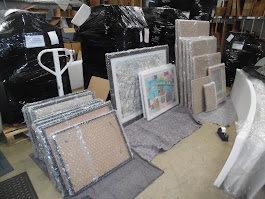
Custom crating is the way to go for art and furniture heading overseas. The pros will build a crate to match your item’s exact size, using sturdy stuff like plywood, foam padding, and corner braces to keep it from shifting or getting banged up. For art, you’ll want acid-free materials to avoid long-term damage—paintings need a layer of glassine paper on the front, and sculptures should have foam around anything that sticks out. Furniture does best with corner protectors and a blanket wrap before crating. Key packaging materials you’ll need:
- Marine-grade plywood for the crate walls
- Closed-cell foam for shock absorption
- Acid-free tissue and glassine paper for direct contact with art
- Silica gel packets to fight off moisture
- Custom-cut foam inserts for weird shapes
Your packaging has to meet International Safe Transit Association (ISTA) standards, especially if you’re shipping internationally. If you’ve got anything temperature-sensitive—like antique furniture or oil paintings—climate-controlled crating is a must. And don’t forget to slap on “Fragile” and “This Side Up” labels in a couple languages so handlers know what’s what.

White-Glove Delivery for High-Value Items
White-glove delivery is really the gold standard for anything pricey or delicate. You get a crew of pros who’ll bring your stuff inside, unpack it, check for damage, and put it right where you want it. They’ll even take away the packing debris and help with assembly if needed. For art, these folks wear gloves (obviously) to keep fingerprints and grime off your pieces, and they’ll do a quick inspection before you sign off. Expect real-time tracking and a scheduled delivery window—no more waiting around all day. White-glove carriers will work with you on building access, elevator bookings, and any weird delivery restrictions. It’s especially handy for big furniture or sculptures that need a team to move safely. The catch? It’ll cost you—usually 20-50% more than standard shipping—but the peace of mind is hard to beat.
Managing Art and Furniture Insurance
Shipping insurance is non-negotiable for valuable art and furniture. Standard carrier liability is a joke—usually capped at $100 or less, no matter what you’re shipping. You’ll want declared value coverage that matches what your stuff is actually worth. For fine art, look for specialized policies that cover not just physical damage but also any loss in value if restoration is needed. Antique furniture insurance should factor in craftsmanship and uniqueness, not just materials. Insurance options to consider:
- Carrier-provided coverage (but don’t expect much)
- Third-party shipping insurance
- Fine art transit insurance from specialists
- All-risk policies that include natural disasters and theft
Make sure your policy spells out how value is determined: “agreed value” pays the set amount, while “actual cash value” takes depreciation into account. You’ll need to show appraisals, receipts, or photos ahead of time. Some insurers require pro packing—so custom crating isn’t just for safety, it’s often a requirement for coverage.
Preventing Common Customs Issues and Managing Costs
Shipping art and furniture internationally is always a bit nerve-wracking, mostly because customs scrutiny is higher for expensive and hard-to-classify stuff. If you get ahead of it with solid paperwork, smart planning, and by using duty reduction programs where you can, you’ll dodge most of the headaches and avoid surprise costs.
Customs Inspections and Clearance Delays
Customs inspections happen a lot with art and furniture since officials are always double-checking value and classification. They want to see that your declared value matches the actual goods and that you’ve picked the right tariff codes. The best way to avoid customs delays is to have every document ready before your shipment even lands: detailed invoices, sharp photos, authenticity certificates for art, and a breakdown of materials for furniture. Working with an experienced customs broker who knows the ins and outs of art and furniture can make a huge difference—they’ll make sure your customs valuation is spot-on, including shipping and insurance, which customs will add in to figure out your total duties. If you get flagged for a physical inspection, expect to lose 3-7 days to the process. You can lower the odds by listing dimensions, materials, artist or manufacturer, and origin on every document. Incomplete paperwork is basically asking for an inspection—and maybe even a fine.
Cost Management Strategies
If you want to keep costs under control, start by figuring out your total tariff exposure before you ship. Duties are based on HS codes, and there’s a big difference: fine art is often duty-free in a lot of countries, but furniture can run 2-8%. With DDP (Delivered Duty Paid), the seller pays customs charges, so you know your total cost up front. DAP (Delivered at Place) means you, as the buyer, pay duties on arrival—so you’ll need some wiggle room in your budget for surprises. Ask for landed cost estimates that include everything: product value, shipping, insurance, duties, VAT or sales taxes, and broker fees. Compare carriers and look into consolidation services—sometimes shipping furniture disassembled can cut down on dimensional weight and save you 15-30% on freight costs. For valuable art, insuring for 110-150% of the item’s value gives you a buffer in case something’s damaged during inspection. It’s not a perfect science, but a little prep goes a long way.
Duty Optimization and Exemption Programs
An ATA Carnet is basically your golden ticket for duty-free temporary import when you’re dealing with art exhibitions, trade shows, or even random furniture samples you need to show off somewhere else; folks in the industry call it a “passport for goods” because, well, that’s kind of what it feels like—it knocks out duties and cuts through a lot of the usual customs hassle, as long as whatever you’re bringing in actually returns to its original home within 12 months (which, to be honest, is usually the plan anyway, right?).
Trade agreements between countries, when they exist, open up a path to preferential tariff rates, and if your furniture happens to be made in one of those partner countries, you might get lucky with reduced or sometimes even zero duties, provided you can produce the right certificates of origin; it’s worth poking around for free trade agreements that match up with your shipping route, since missing out on those savings would be a bit painful.
Certain categories receive duty exemptions:
| Item Type | Common Exemption Threshold | Requirements |
|---|---|---|
| Original artwork | Often duty-free | Certificate of authenticity |
| Antique furniture (100+ years) | Usually duty-free | Proof of age documentation |
| Personal effects | Varies by country | Proof of prior ownership |
De minimis values technically allow for duty-free entry under certain thresholds, but let’s be real—art and furniture almost always blow past those limits, so it’s rare that this loophole actually helps; trying to split up your shipment just to sneak under the threshold is risky business and could land you in hot water for customs fraud, so probably not worth it.
It’s always smart to review what exemption programs the destination country offers for cultural goods, educational institutions, or museums—some of these specialized programs can wipe out hefty duty costs if your shipment qualifies, though you’ll need to plan ahead and get those applications in early, which, yeah, can be a hassle but is usually worth it in the end.